Shop local and keep our towns vibrant and strong

Shop local

By Susan Baldani

The Coronavirus has hit the country hard, and will unfortunately have lasting ramifications for quite some time. The economy has taken a severe hit, and many stores, especially those that are small and independently owned,  have either gone out of business or are struggling to survive. So, once this crisis is over, what can we do to help?

Next time you’re out, take a stroll around your downtown. Look closely at the local businesses to be found there. We often drive by without giving them a second thought. In addition to the stores you may already patronize, focus on those you may never have taken the time to visit. Speak to the owners and salespeople and find out what they have to offer. You never know what you might find. If you see something you like, buy it, and then tell other people about it.  Spread the word about these fine establishments –  word of mouth is an effective form of advertising and doesn’t cost anything. I’ve often visited places because someone told me how wonderful the products and service were in those particular shops.

Pay careful attention to the advertisements in this and other local publications to find out what they actually have to offer. If some shops don’t exactly fit what you’re interested in or are selling things you don’t usually buy, try to support them anyway. For example, if you’re not a knitter but know someone who is, buy special yarn and needles as gifts from those shops that sell them. If you have never gone antiquing, but love the look of old and solid furniture, browse what these types of stores have in stock. If you’re a novice, you can also get all  your questions answered about particular pieces or styles you’re interested in. The owners and salespeople in these small stores are usually very knowledgeable about their businesses.

Many of these local mom-and-pop stores have been fixtures in their communities for ages. The proprietors, some going back generations, have worked hard for countless years to build up their businesses and develop loyal customer bases.  Small towns just wouldn’t be the same without them.

So, let’s show our support for these neighborhood treasures that can be found all across the country, in small towns and large, by buying locally and encouraging others to do the same. You’ll not only be doing a great service, but also have fun finding some unique and quality items to enjoy for years to come.

Written for The Country Register published throughout the U.S. and Canada.

The art of being in the right place at the right time

Justin Lyons

How chance encounters led to wide spread recognition of an artist’s talent

By Sue Baldani

Besides talent and hard work, Justin Lyons’ success as an artist can also be attributed to serendipity. His story reads like a late-night movie or a best-selling book.

Lyons was in his late 20s when a friend, Jeremy Lynch (now a film maker in California), introduced him to wheatpasting in 2005. Combining paper, paint and drawings, wheatpasting is a type of street art that is affixed to public spaces using a mixture of flour, water and sugar. Painting on discarded wood, Lyons would hang his unsigned works all over Fort Walton Beach, FL, where he was living at the time. When they began disappearing, he assumed the city was taking them down.

He persevered though and one night, about eight months later, he was preparing to hang another piece of work when he ran into a restaurant owner in town. After noticing the painting in the back of his truck, she told him she had some of his other pieces hanging in her restaurant and asked if she could have this one as well. In return, she offered him not only a generous meal at the restaurant, but also the opportunity to show his work there. Three months later, with the help of Lynch, he did just that, and sold 15 of his 20 pieces.

A few years down the road, he got married and had kids, so making art for a living got put on hold. But, by 2012, he was once again painting heavily and showing his work at art fairs and local art shows. Soon, he was able to open a small studio and gallery in Santa Rosa Beach, FL, where he lives with his wife Kayla and children, Seven, Isla and Lynox.

Not too long after that, another chance meeting took place that would expand his reach greatly into the art world. A woman, on her way to dinner, was walking by his gallery when she ducked under the awning to get out of the rain. Liking what she saw through the window, she went inside and introduced herself as an art consultant in Miami. After looking around some more, she asked if she could show some of his paintings at Art Basel Miami. He said yes, and after that show in 2014, he was picked up by multiple galleries. His art career had taken off.

Over the years, Lyons has refined his style and does not consider himself a street artist anymore. Instead, he said, he’s a self-taught contemporary and expressionism artist.

What initially drew him to art in the first place was the self-expression aspect of it. “That was always my baseline, to paint things that are personal to me,” said Lyons. “My goal is to paint what I feel drawn to or something that makes a statement. I always liked the visual of simple, childlike art, but wanted to merge that imagery with something with a deeper meaning. So the visual is childlike, but the message is more intellectual.”

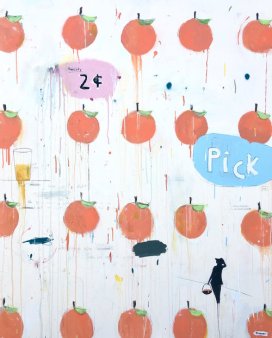
Common in his artwork are words and phrases that spring into his mind when he’s creating. Lyons will also often change his thoughts and then cross out words and replace some with others. Instead of covering them up and starting fresh, he likes leaving the changes showing.

“When I’m doing up layers, I’m writing things that are spontaneously in my head,” he said. “It’s an immediate thought, but then I might change my mind.”

As far as materials go, Lyons is open minded and uses what feels right at the time, whether it’s wood, acrylic, oil stick, spray paint, house paint, epoxy resin, or pencils.

“I’m just like anything goes; it’s more about the story than the sophistication of the paintings. I’m more interested in the deeper meanings of things and how they can make people question things or feel a certain way. The message aspect of it is what originally drew me to art.”

He does find people’s interpretations of his paintings interesting. “I’ve heard the gamut, honestly,” he said. “Some people are on the same page as I am. Others say, ‘Well, I get this from it,’ and, I’m like, ‘Yeah, okay.’ I try not to say ‘Hey, this is what it is,’ or ‘I didn’t mean that,’ because I think it ruins it for people.”

When he first started out, a waitress who worked in the restaurant where his art was hanging called him in tears to let him know about the connection she had with one of his paintings and the way in which she interpreted it. Even though he didn’t see that message, he was glad it worked for her in her own personal way.

Atlanta residents will soon get to interpret Lyons’ art for themselves. He has a show at the Maune Contemporary gallery in April where he will display about 15 to 20 of his pieces. The gallery, which opened in September 2019, is owned by Ramsey and Heidi Maune.

“When they approached me to be represented by them, I was actually also being approached by a few other galleries in the area, and I was going back and forth to see where my best fit would be,” Lyons said. “When I walked into the Maune gallery and met Heidi and Ramsey, they were just the coolest people and their gallery space was beautiful.”

He went on to say that even though the other gallery owners were in the business a lot longer than the Maune’s, that wasn’t important to him. It was that he believed in their vision for their gallery and artists.

‘They’re awesome people who are just so nice and generous. They really believe in my work, and not only have shown it with words, but tangibly by being uber supportive,” he said.

Even though he has a few collectors in Atlanta, this will be his first show in the city, as well as in the state of Georgia.

“I’m excited; I love Atlanta,” he said. “It has a cool vibe to it, and I have a lot of friends in Atlanta.”

He said he will work with Heidi and Ramsey to determine the right pieces for the show.

“Location does matter, but the stuff that I make is more about storytelling, so I don’t try to box myself in with geographical locations,” he said. “I just try to make paintings that humans can relate to. Whether they’re white collar, blue collar or no collar, I just try to make art that people can make a connection with.”

When choosing paintings for a show, he also collaborates with his wife, who is also his business partner. He said that she helps run his business and knows the ins and outs of the industry. In addition to selling his pieces, Lyons also donates his artwork to local non-profit organizations and fundraisers.

“I’m constantly in my studio and I paint every day,” said Lyons. “I just like doing it and I’m so grateful and lucky that people have found my stuff.”

To learn more about Justin Lyons, his art, and the gallery, go to http://www.maune.com/and to jlyonsart.com/” And, be sure to visit Maune Contemporary gallery this April to see his work in person.

Written for Midtown Lifestyles in Atlanta, GA.
Fluff and fun on an alpaca farm

mistletoe_farms_alpaca

Take a tour and learn all about these gentle and oh-so-cute animals

By Sue Baldani

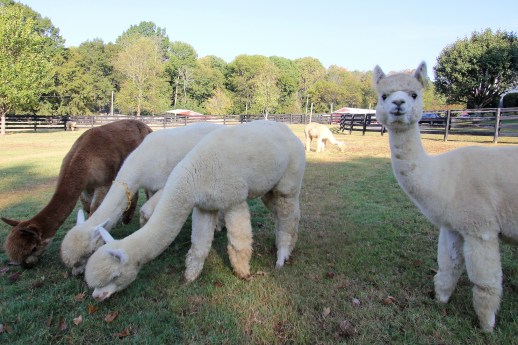
Located on 15 acres in Franklin, Mistletoe Farm is home to a herd of alpacas, many of whom love visitors. Started by Leanne and Tom Butchko, the farm was named for the abundance of mistletoe on the property. Plus, while looking at all those cute faces, you might just want to kiss one.

“People are surprised how friendly, curious, quiet and docile the alpacas are and that they all have unique personalities just like humans,” said Leanne. “Some are loving and enjoy chin rubs and others are aloof and prefer watching life from the sidelines. They are also amazed that an adult alpaca weighs only about 150 pounds.”

When Leanne and Tom, who are both certified public accountants, first heard about alpacas from friends, they did some research to find out more about them. What they learned made them want some of their own, and inspired them to buy their farm.

“We began our alpaca adventures about fifteen years ago by winning one alpaca,” said Leanne. “Trick is you can’t have just one! They would die of loneliness. So we purchased a mom and cria (baby) and started our herd with three.”

Today, they keep between 20 – 25 alpacas, and breed and sell about five to 10 a year. Because of the amount of fiber alpacas produce, Leanne mastered the art of weaving, felting and spinning; she now makes products to sell in their farm store. Of course, with so much fiber, she has to have help.

“We are blessed to have several Tennessee knitters that help us make our hats, ear warmers, scarves and other natural goods using our farm yarn,” said Leanne. “Our family helps with various farm events and the designing of our non-seasonal goods such as t-shirts, mugs and printed products. We also have six grandkids who enjoy jumping in and helping out!”

Their goal each year is to make use of all the fleece by making yarn with the prime grade fiber. The seconds are used to make dryer balls and felted sheets so nothing goes to waste.

For visitors who would like to learn weaving, felting and spinning, they also offer classes on the farm. All age groups and levels of experience are welcome. There are also classes to learn the art of natural dyeing.

“Our natural dye classes consist of foraging for natural dye materials found in our surroundings such as walnuts, leaves, berries and flowers,” said Leanne. “We then teach dye methods including extraction and ‘setting’ on various types of fabric, yarn, silk or paper.”

Leanne said that alpaca fiber is hypoallergenic, water repellent, flame resistant, light weight, and breathable, and it wicks away moisture while being several times warmer than wool. It also comes in 16 natural colors and dyes easily.

Mistletoe Farm Alpacas is very focused on sustainable practices. Leanne explained that alpacas are easy on the land.  Since they have padded feet that do not pull grass up by the roots, they are low impact on pastures and soil. They also eat very little per body weigh; a herd of 10 – 15 alpacas eat about one 50 pound bale of hay a day in winter. The farm also composts their manure directly on pastures and in their dye garden. Alpaca fertilizer is considered a rich soil conditioner and improves soil quality and the ability to retain water. It’s high in nitrogen and potassium, and doesn’t need to be aged like most livestock manure. It also breaks down quickly into the soil.

To see these adorable animals, book your visit through their website at www.mistletoefarmalpacas.com . A typical farm tour lasts 1 ½ hours, and half of that includes interacting and taking pictures with the alpacas. The other half is spent in their studio seeing what they make with all that fluffiness.

“We continue to be blessed each year with more and more visitors. Best guesstimate is between 5,000-10,000 last year,” said Leanne. “We do close during July and August due to the summer heat, and the alpacas tend to spend their days in front of the fans and in kiddie pools!”

Written for Brentwood Lifestyle magazine in Brentwood, TN.

Everything in its place

Closet

Getting organized saves both time and money

By Sue Baldani

How often have we asked ourselves, “Where’d I put that”? This is usually followed by a frustrating and sometimes fruitless search.

WIPT designs (pronounced whipped, as in whipping your space into shape, and an acronym for the question above) was started by Beth Hayden to help people get organized. With a background in interior design and space planning, combined with a lifelong obsession with tidiness, this profession suits her perfectly.

Being a single mother at 19, while going to school and working full time, meant having to be super organized in order to get everything done.

“I needed everything to be in its place and easy to find since we didn’t have a lot of time,” said Beth.

After her daughter started college, Beth moved to Nashville and began to build her dream business. At first, organizing was just something she did on the side, but eventually word-of-mouth recommendations and glowing social media testimonials generated a high demand for her skills. So, on March 4, 2019, WIPT designs was born.

“Starting a business was very scary to me as a woman and a single mom with nothing to fall back on,” said Beth. “I built it from scratch, and I basically do all business through referrals.”

Beth prides herself on not just being able to organize people’s spaces, whether a master bedroom, small pantry, or office, but doing it in a very individualized way. She likes to get to know her clients so she can construct customized plans that fit their lifestyles. This is why she offers a free one-hour consultation.

“I specialize in organizing for the space, but also for the person,” said Beth.

When she arrives at a client’s home, she takes pictures and measurements of the room or space to be organized. Then, if there’s a budget or need to buy bins and other items, she’ll go on Amazon and make a list of things to order. Once those items arrive, she’ll be ready to get started. Also, in addition to organizing, Beth can also design and decorate the space as well.

Being organized, she said, is one of the biggest natural stress relievers. Plus, being organized saves time as well as money, since people can see what they have and avoid buying duplicates.

Most people want to be organized, but they’re afraid it’s going to take too much time or they don’t know where to start. But, once a space is organized, it’s much easier to keep up.

One of Beth’s favorite quotes is by Benjamin Franklin, which states, “Every minute spent organizing is an hour earned.”

To find some great organizational ideas and see some of her projects, follow WIPT designs on Instagram. Or go to https://www.wiptdesigns.com/.

Tip 1
Clear bins are the most efficient containers because you can see what’s inside. To make them pretty, put nice labels on them. Or, to save money, use shoeboxes spray painted in your choice of colors.

Tip 2
In the pantry, always place the most used items in the “prime real estate” sections, which are the easiest spots to access. If you’re a big breakfast family, put your cereals there. Also, group items like pasta and pasta sauce together.

Tip 3
Since most people spend so much time doing laundry, make the laundry room an inviting place. Put detergent and pods in pretty jars (out of reach of children), buy a pretty laundry basket, and add signs or pictures.

Tip 4
Piles are a guarantee of disorganization. If you have to have stacks of clothing, use pocket folding. This tucks pieces in so they don’t become unfolded. Spending time refolding is a time waster. This type of folding also allows travelers to pack and unpack easily.

Written for Brentwood Lifestyle magazine in Brentwood, TN.

Mother’s Day Blessings

Here’s an article I’ve posted in the past, and it’s still oh-so-true.

Mother's Day pic

What I have learned from my mother

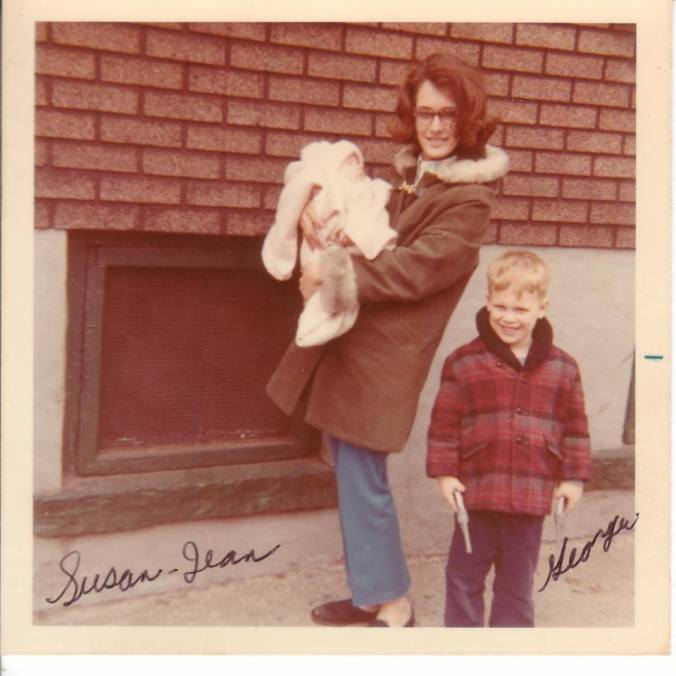
By Susan Baldani

What qualities does one need to be a wonderful mother? Well, let’s see. Kindness, selflessness, a loving heart, a caring personality, an abundance of patience, acceptance and wisdom are just a few necessary qualities. Fortunately for me, my mother has all of these and more.

Even though I never had children of my own, I was lucky enough to be given the opportunity to be a stepmother and, in the last few years, a grandmother, or in my case, a MeMa. I fell into these roles rather easily, I believe, because I had such a great role model in my mother (and grandmothers). Not that the men in my life haven’t influenced me positively as well, but this article is, after all, to celebrate Mother’s Day.

I learned that my needs have to sometimes be overlooked in order to make others happy. That sacrifice is a form of love and not something to begrudge.  I learned that giving to others makes me much happier than any gift I could give myself.  I learned how to bring comfort, even when I feel like I’m the one who needs comforting, and that it’s better to get up to help when all I want is to do is lie down.  These are traits I have tried to carry over into all of my relationships.

My mom is also one of my very best friends. I can talk to her about anything and she will never judge me, criticize me, or try to make decisions for me and my future.  She will give me advice, but knows that I need to make some mistakes to find my own true path in life, and hitting a few speed bumps along the journey is the only way to really find the right destination.

My life has been filled with many successes, both personally and professionally. My mother has encouraged me to take advantage of opportunities that have arisen and has been my tireless cheerleader. I couldn’t have accomplished what I have without the belief instilled in me to trust in my own decisions.

I know I am so very fortunate to still have my mom. Some of my friends have already had to say goodbye to theirs, and my heart truly breaks for them since I know what a hole I would have in my life without my mother. No matter how old I get, I will always need my mommy.  Happy Mother’s Day!


Written for The Country Register, published across the U.S. and Canada.


Forget your troubles and do a puzzle

jigsaw-305576_960_720

By Sue Baldani

There is always a jigsaw puzzle in various state of completion on my dining room table. I do it on a big piece of cardboard so when people are coming for dinner, I can just pick it up and slide it under the couch. Out of sight, but not out of mind. As soon as the coast is clear, I drag it back out, with the guests never knowing that they were sitting on a sandy beach or snow-covered mountain.

As a child, I always enjoyed puzzles, but as an adult I forgot about them for a while. Then, about 10 years ago, I was planning a trip to the shore to stay in a rental house for a week. I was so looking forward to relaxing. I had all my beach gear, books and magazines, but wondered what else I could do when I was tired of the hot sun and sand. I happened to see a beach-themed puzzle at the store, and just like that, I had my new hobby.

Besides being fun, I find that puzzles are often a great way to overcome anxiety and stress. When I sit down and work on a puzzle, focusing so intently on those little pieces helps me forget about my own problems for a while. It’s hard to worry when you’re trying to complete the whiskered face of an adorable cat. (A lot of my puzzles involve cats, dogs and a variety of other cute animals.)

I am very, very picky when it comes to choosing a puzzle. First of all, I like to occasionally match them to the season, so in the summer I will pick out a beach or floral scene, for example. I also need a busy puzzle; no big blue skies or wide expanses of green lawns. No, the more stuff crammed into that square or rectangular picture the better. I also prefer between 500 and 750 pieces; anything less is too easy and anything more sometimes frustrates me. And I don’t like to be frustrated. After all, I’m doing puzzles to de-stress and enjoy myself.

What I find truly amusing is when people come in, see me doing a puzzle, and remark about what an old-fashioned pursuit it is. However, more often than not, they find themselves wandering over to watch. Then, before they realize what’s happening, they’re doing the puzzle with me.

By the way, I think puzzles are making a comeback. When I went to my local library last week, I noticed that they now have two jigsaw puzzles going at all times. What a great idea!

Written for The Country Register, distributed across the USA and Canada

Batteries Not Included

Board Games Can Cure Cabin Fever

It always surprises people when they walk into my living room and see a half-finished jigsaw puzzle. They ask, “Wow, people still do those?” Yes, yes they do. They also play Monopoly, Clue, Connect 4 and other non-tech games.

As a matter of fact, board games are making a comeback. Go into the toy department of any store, and you will still see a large array of not only board games, but card games and jigsaw puzzles as well. According to ArticleBiz.com, “Games like Risk, Scrabble, Trivial Pursuit and The Game of Life are some of the classic games that are still very much in demand and well loved. And traditional games like chess, checkers, and backgammon will always be favorites.”

Who doesn’t remember sitting around with family and friends while laughing and arguing about who was going to win the game? Or hearing the cheers and boos of your fellow players as you push that round checker across the board or try to extricate that wooden piece during Jenga? That cannot be duplicated on a computer, phone or television screen. And no slick 3D video game can replace this live social interaction.

For most of us, it started out with Candy Land and Chutes and Ladders, and now the choices are many. Board games like Scattergories and Pictionary to card games such as Uno or Phase 10; there is something for everyone, at any age.  Also, as stated on howandwhys.com, when it comes to kids, “Board games play a huge role in children’s health and brain development: different types of board games help to develop logic and reasoning skills, improve critical thinking, increase verbal and communication skills, develop attention skills and the ability to concentrate for longer periods of time.” Furthermore, if the power goes out or there are no batteries in the house, not to worry. You can still carry on with your game or puzzle. And besides, playing Twister in the dark may be a lot more fun and challenging.

So go into your closets, dust off those game boxes (or pick up some new ones), and make plans for a get-together with your favorite people. Whether you make dinner first, or just serve coffee and cake, it doesn’t much matter. Sit around and enjoy one another’s company while the televisions, phones and computers sit silent and lonely in the background. And remember, no cheating. Enjoy!

Written for The Country Register, published across the U.S. and Canada.

Bring in the spring with colorful, fun treats while helping children learn new skills

Kids Baking

March can be a tricky month. One week we can have a warm and sunny day followed by a cold and blustery one. It may even snow. Some of our biggest storms have happened in March.

Because of this, it’s somewhat difficult to make plans. Although winter is on its way out and we’re eager to get outdoors, those plans don’t always work out. Children especially have a hard time being stuck inside and tend to develop cabin fever much quicker than adults.

Why not then plan some fun things to do in the house? It’s even better when we can combine something the kids will enjoy with learning new skills.

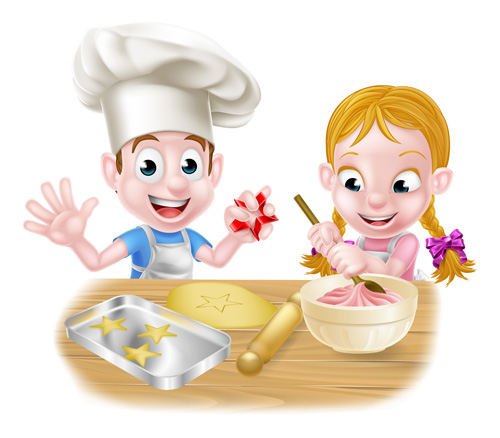
Baking is one of these perfect activities. Not only will children love mixing the ingredients and decorating the cakes and cookies, but they will also learn how to make something from scratch, instead of buying it in a store, ready-made.

To make things even more interesting, use cookie cutters shaped like flowers and bunnies and anything else that will make them smile. And when those cookies and cupcakes are ready for decorating, use pastel icings, dyed sugars and bright sprinkles to bring some spring color indoors. Make them festive and fun to liven up an otherwise gray day.

Besides being a great way to pass the time indoors, another benefit of baking is that children can also acquire some useful skills in math and science. Depending on the child’s age, you can make it as easy or as hard as you like. For example, with little kids, if a recipe calls for 2 eggs, ask them how many they would need in order to double the recipe. Or, for older children, if it says ½ of a teaspoon of salt, ask them how much they would need if you were to cut the recipe in half.

For science, explain what baking soda and baking powder do and why you need them in some recipes. Or, if making bread, give them information about yeast and how it makes the dough rise. These are quick and entertaining ways to teach children some basics while they learn how to make delicious cookies or crusty bread.

After all this, if the sun eventually does come out, gather up all the treats you’ve made and have a picnic outdoors. Just remember to pack some cold milk with those cookies, and you’re all set.

Simple Spring Sugar Cookies

Ingredients
• 1-½ cup Sugar
• 1 cup Butter softened for flat thinner cookies (or you can use Butter Crisco, for fluffier cookies)
• 3 whole Egg Yolks
• ½ teaspoons Vanilla
• 2-½ cups Flour
• ½ teaspoons Baking Soda
• 1 teaspoon Cream of Tartar
• 1 pinch Salt
• Various Colored Sugars, for Garnish

Preparation
Cream sugar and butter (or Crisco) until light and fluffy, then add egg yolks and mix well. Add vanilla extract. Add remaining dry ingredients (except the colored sugar, which is a garnish) and mix until mixture becomes a soft dough. Chill in the refrigerator for 1–3 hours.
Preheat oven to 350ºF. Roll dough into 1″ or 1 1/2″ balls and roll in colored sugar. Place on ungreased baking sheets about 2″ apart and bake for about 12 minutes.

Enjoy!

Recipe credit: Brandy’s Baking.

Written for The Country Register published across the U.S. and Canada

Take a Hike and Exercise Your Mind and Body

hiking 2

Many of us spend too much time indoors, whether due to work or other responsibilities. Now is the time to get out, get active and breathe in some fresh air.

Explore your town or state to find the best places to hike. Many trails can be traversed easily with just a good pair of sneakers. Others are more arduous and may require a pair of hiking boots. Hiking is something you can do anytime, either by yourself or with a partner or group, and trails can be matched to your level of ability. It’s a great way to enjoy nature and get away from the hustle and bustle of our sometimes fast-paced world. Stroll under a canopy of trees while birds and other wildlife serenade you. Let yourself relax and forget your troubles. Or if you prefer, push yourself up a steep incline and revel in the satisfaction of making it to the top.

There are some important items to bring with you, whether you’re taking a short walk around a park or a long trek through the mountains. Water, of course, is number one on the list. It’s important to stay hydrated while doing any form of exercise. Bug spray or some kind of tick repellent is also critical, and make sure you wear high quality socks. It’s also a good idea to bring along some healthy snacks, and yes, bring your phone, but only use it to take pictures. Also pack an extra pair of shoelaces, just in case.

If you want to take your hike a step further, try geocaching. What is this, you ask? As defined by Wikipedia, “Geocaching is an outdoor recreational activity, in which participants use a Global Positioning System (GPS) receiver or mobile device and other navigational techniques to hide and seek containers, called ‘geocaches’ or ‘caches’, at specific locations marked by coordinates all over the world.” Doesn’t that sound interesting? When you find a cache, remember to sign and date the log book and return the item exactly how and where you found it. A cache can be any number of things: a toy, trinket, a book, or something else that has some kind of meaning to the person who left it behind. For more information, go to https://www.geocaching.com/play.

If geocaching is not your thing, you can make up your own games as you walk along. How many pine cones can you fit into your pockets? Who can spot the first squirrel in a tree, or the first bird’s nest? What is the first animal track you see? These are just a few examples, but use your imagination to make it an adventure.

Written for The Country Register published across the U.S. and Canada.

Homemade toys spark creativity and imagination

homemade-toys-to-make-with-socks-

Old-fashioned fun for big and little kids

By Susan Baldani

When many of us think back to our childhood toys, we don’t think of computers or video games.  The majority of our toys didn’t make noises or light up, and we often had to use our imaginations to have fun.

Parents and caregivers can bring back this same kind of joy and wonder for their children. Yes, a lot of kids love the latest and loudest products as seen on television commercials and store shelves, but many don’t realize the entertainment value of quiet, simple and even homemade toys.

As a little girl, I spent a lot of time at my grandmother’s house. I loved playing there, even though she didn’t have a lot of money for anything extravagant. But I do remember her sewing together little square bags out of extra fabric and filling them with dried beans. She would then take a basket and have us toss these bean bags in there for points. What a great memory for me and my siblings.

There is an abundance of ideas for simple, homemade toys to be found online on sites such as https://happyhooligans.ca/70-awesome-toys-make-kids/, in library books and in magazines. Many of these are made with items already in our homes or even in our backyards. Making toys is also a great way to recycle all those plastic bottles and soup cans.

In her article Really Cool Toys for Kids to Make Themselves on rediscoveredfamilies.com, Sharon Harding writes, “Children are naturally creative and have fantastic imaginations. They can make toys out of anything.” She also goes on to cite that making their own toys “stimulates the imagination, helps children solve problems and discover that they can make their own fun.”

Besides having a great time with the end products, the making of these toys can also help children in a myriad of ways. Kids get to use their imaginations while honing their hand-eye coordination and fine motor skills. Oftentimes counting is involved, so it can help children learn numbers and math skills.

In her article Why Art and Creativity are Important on Parents.com, author Paula Bernstein writes, “When children experiment with materials, they dabble in science. Most important perhaps, when kids feel good while they are creating, art helps boost self-confidence. And children who feel able to experiment and to make mistakes feel free to invent new ways of thinking, which extends well beyond the craft room.”

Letting children help with making these toys enables them to feel a sense of accomplishment and pride in what they’ve created. This in turn will increase the likelihood of them playing with the things they’ve made and motivate them to make even more. These projects are also a great way for parents and children to spend time together in a meaningful and goal-oriented way.

Here are some ideas for parents and children:

  • Want to do a hand puppet show with your kids? Grab some old socks and make faces on them. If you want to get really fancy, glue or sew some buttons for the eyes and nose and maybe some yarn for the mouth and hair. Have kids color a big piece of cardboard (even a pizza box will work) to make the “stage” that the puppets will appear above.
  • Speaking of cardboard boxes, the ideas are endless. Have children paint or color the outside. These can become playhouses for kids or dolls, blocks to stack on top of each other, or even a toy box for all those homemade toys. Most kids (and cats) love boxes.
  • What child doesn’t like balloons? Take large paper plates and a large Popsicle stick for the handle. Make a slit in the bottom of the plates, slide the “handle” partway into it and tape. Now they can play balloon tennis, which is even safe to play indoors since a balloon can’t do much damage. Use a bed, coffee table or a couch as your “net.” This is a great rainy day activity.
  • What about homemade play dough made with ingredients already in your kitchen? For a great recipe, go to https://theimaginationtree.com/best-ever-no-cook-play-dough-recipe/. Then use cookie cutters, small rolling pins and other plastic and safe baking items to make all different shapes and patterns.
  • Have your kids find some smooth rocks, paint or color on animal faces, and they’ll have their own set of pet rocks. Or use seashells; these can become sea pets.
  • A simple piece of chalk can make a hopscotch board and a small rock can be the marker. This makes for great exercise and balance control.
  • Holiday themed toys are also fun. Make ornaments out of old costume jewelry or cut out pictures from last year’s Christmas cards. A simple hole puncher and some yarn and you’re ready to hang it on the tree.

Start collecting things now for future toy making. Rinse out and store bottles, cans, and other odds and ends for fun, easy and inexpensive projects. Remind your children to be on the lookout for anything that can be used in your next creation. Make it a family event, one that will foster great memories now and into the future.